Zombie Foreclosures in San Antonio: Do You Still Own Your Home?
By Monica Gonzalez, REALTOR® | CDPE ·
You got the foreclosure letters. You packed up, moved out, and assumed the bank took the house. Then, months or even years later, a tax bill, a code violation notice, or an HOA letter shows up with your name on it. If that sounds familiar, you may be dealing with a zombie foreclosure.
What is a zombie foreclosure?
A zombie foreclosure happens when a lender starts the foreclosure process but never finishes it. The homeowner leaves, thinking the house is gone, but the sale never happens. Legally, the home is still in the homeowner's name, along with the responsibilities that come with it.
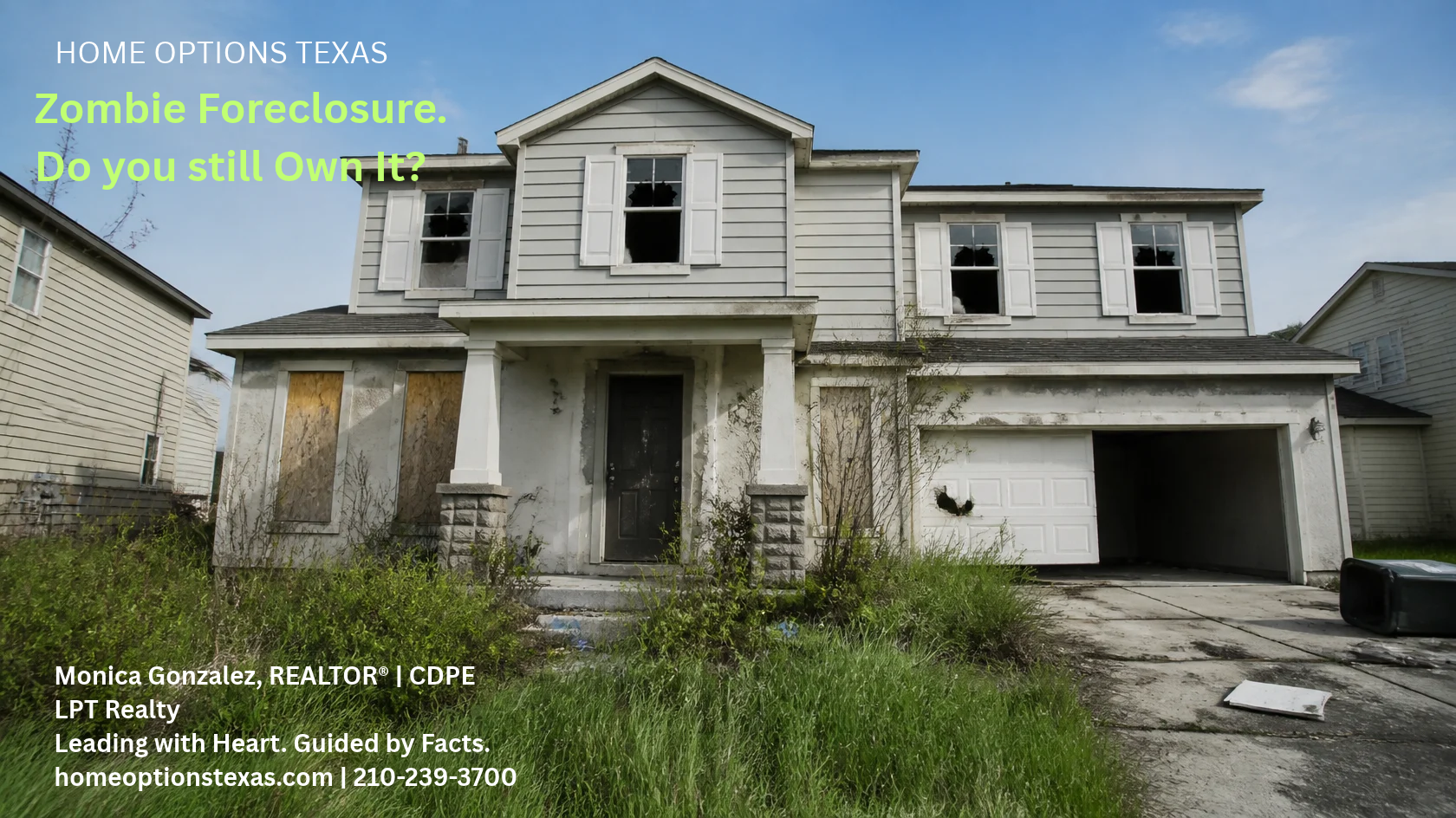
The house often sits empty. Grass grows, windows get broken, and the property can fall into disrepair, while the owner on record may not even know they still own it.
Why lenders sometimes stop
There's no single reason. A lender may decide a property is worth less than the cost of finishing the foreclosure and maintaining it. Loans get sold or transferred between servicers, and files get lost. Sometimes the process is simply paused and never picked back up.
How foreclosure normally works in Texas
Most Texas foreclosures happen outside of court. In general, the lender sends a notice of default with time to catch up, then a notice of sale, and the property is sold at a public auction on the first Tuesday of the month. In San Antonio, those auctions are held for Bexar County properties.
The key point: until a sale actually takes place and the deed is transferred, you generally remain the owner. A notice is not a sale.
What you may still be responsible for
- Property taxes owed to Bexar County and other taxing entities
- HOA dues and fees, if the home is in an HOA
- City code violations, such as overgrown yards or an unsecured vacant structure
- Insurance and liability if someone is hurt on the property
- The mortgage balance, which may still be growing with interest and fees
How to find out if you still own the house
- Look up the property on the Bexar Appraisal District website and see whose name is listed as owner.
- Check the county records for a recorded foreclosure (trustee's) deed.
- Call your loan servicer and ask in writing for the current status of the loan and whether a sale took place.
- Keep copies of every letter you receive.
Your options if you still own it
Finding out you still own the house can feel overwhelming, but it can also open doors. Depending on your situation, options may include:
- Selling the home, possibly as a short sale if you owe more than it's worth
- Working out a loan modification or repayment plan with the servicer
- A deed in lieu of foreclosure, where you hand the property back to the lender by agreement
- Moving back in, if it makes sense and you can bring the loan current
Texas also has time limits on how long a lender can wait to foreclose after calling a loan due, but those rules have exceptions. A real estate attorney can tell you how they apply to you.
You don't have to sort this out alone
As a REALTOR® and Certified Distressed Property Expert (CDPE), I help San Antonio and Bexar County homeowners understand where they stand and what choices they really have. No pressure, just honest guidance.
Request a free consultation or call 210-239-3700. Learn more at homeoptionstexas.com.
Monica Gonzalez, REALTOR® | CDPE
LPT Realty
Call: 210-239-3700
Website: homeoptionstexas.com
No pressure. No judgment. Just facts, options, and a plan.
❤️ Leading with Heart. Guided by Facts.
This article is for general information only and is not legal, tax, or financial advice. Please consult a qualified attorney or tax professional about your situation.